


A packing that survives one duty can overheat, extrude, or attack a shaft in another. The practical task is to match the complete operating envelope, not to pick a familiar fiber name. This guide turns media, temperature, pressure, motion, and shaft speed into a repeatable shortlist for pumps and valves.
A reliable selection begins with one complete duty sheet. The industry shorthand STAMPS captures the core inputs: size, temperature, application, media, pressure, and speed. It prevents a common error: comparing gland packing materials by temperature alone while ignoring motion and chemistry.
Media compatibility is the first exclusion test because an attacked yarn, coating, or lubricant cannot remain stable. Record the exact fluid and concentration rather than writing only “chemical.” Abrasive solids also change the problem: the packing needs wear resistance, while the shaft or sleeve still needs protection from scoring.
Motion determines how much frictional heat and wear the packing must manage. Valve stems are often static or slow, where pressure containment and low actuation friction dominate. Pump shafts are continuous dynamic surfaces, so their linear speed must be calculated from shaft diameter and rpm; a larger shaft runs faster at the same rpm.
Material names are a starting point, not a guaranteed operating limit. Braiding, density, coatings, lubricants, core design, and reinforcement change performance. The following comparison is a shortlisting tool; the chosen manufacturer grade must still be checked against the full duty sheet.
|
Material family |
Useful starting strength |
Risk to verify |
Typical shortlist |
|
Pure PTFE |
Broad chemical resistance and low friction |
Heat removal, creep, lubricant and cleanliness grade |
Corrosive or cleanliness-sensitive service |
|
Graphite or carbon |
Heat transfer and high-temperature capability |
Oxidizers, emissions design and reinforcement |
Steam, hot valves and thermally demanding duty |
|
Aramid |
Strength, abrasion resistance and anti-extrusion support |
Shaft wear, lubrication and chemical compatibility |
Slurries, gritty media and end rings |
|
Hybrid set |
Combines resilient sealing rings with stronger end rings |
Ring order and compatibility of every component |
Mixed pressure, wear or extrusion risks |
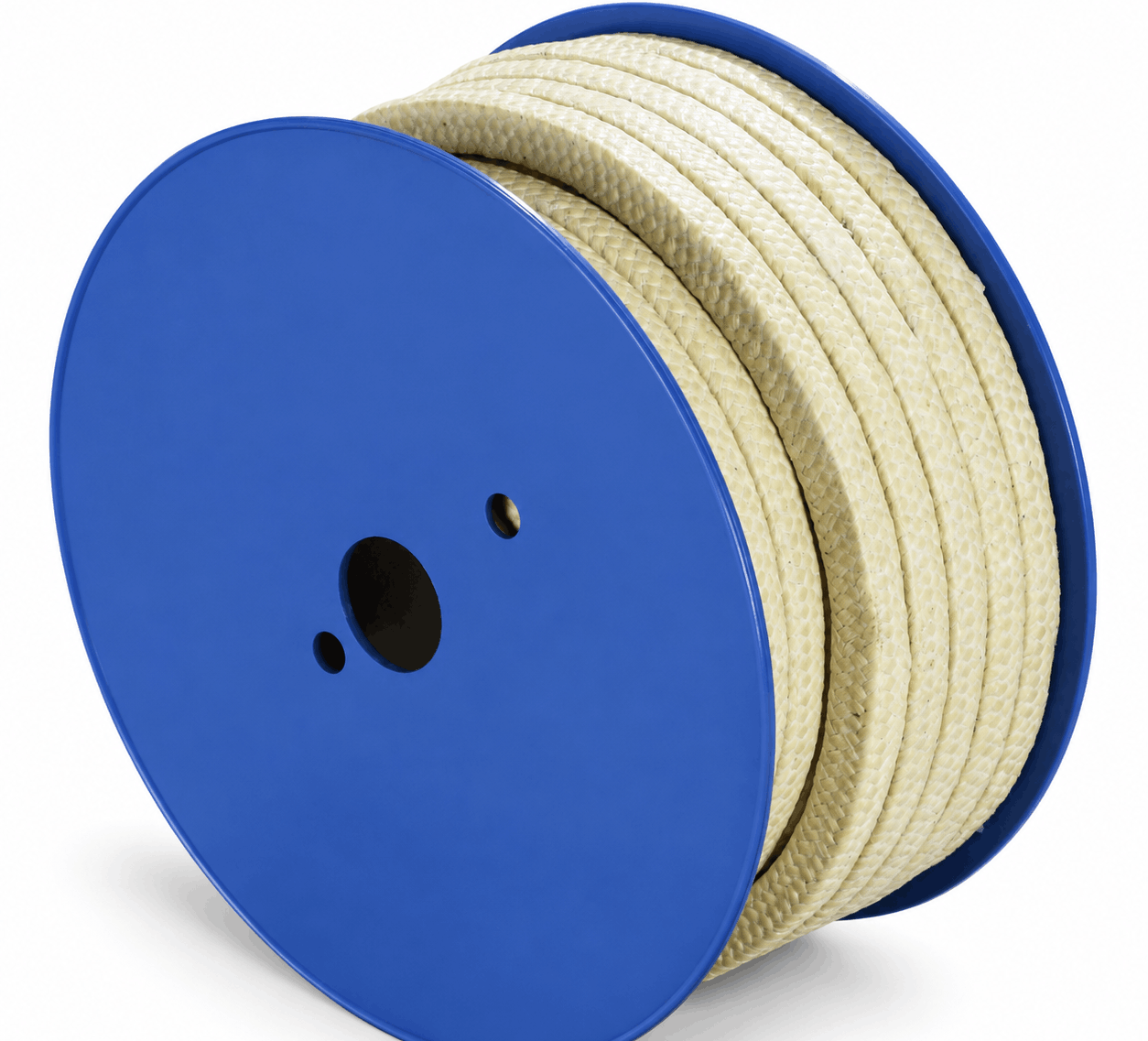
A product rating applies only to its construction and motion category. Sunpass Sealing Style 6500 aramid packing, for example, uses PTFE impregnation but is not pure PTFE; the aramid reinforcement changes its strength and wear profile. Its pressure limits also differ for rotary pumps, valves, and reciprocating equipment, so one maximum cannot represent every application.
Rotary pump packing needs a heat-removal path as well as chemical compatibility. A centrifugal pump gland packing shortlist should state shaft diameter, rpm, flush arrangement, solids, sleeve finish, and acceptable leakage. Without those inputs, a low-friction fiber can still run hot when the gland is over-compressed or cooling flow is inadequate.
Controlled leakage may lubricate and cool a pump packing interface. The target is not a universal drip count; it depends on packing style, process fluid, flush plan, equipment condition, and plant rules. A hot, dry gland is therefore a warning to check adjustment and lubrication before blaming the material.
Valve packing must contain pressure while allowing the stem to move without excessive torque. Suitable gland packing for valves may use PTFE-based constructions in lower-temperature service or graphite-based systems as temperature rises. Frequently actuated valves also need low friction and good conformity, while high pressure increases extrusion risk at the ends of the set.
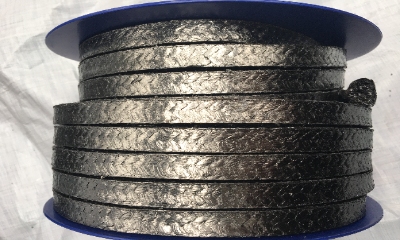
Valve duty also requires a clear emissions and oxidizer check. Flexible graphite is often shortlisted for hot service, but strong oxidizing media can degrade carbon and graphite materials. The decision must therefore reconcile temperature with chemistry rather than treating graphite as an automatic high-temperature answer.
Published limits are screening values, not independent permissions. Process temperature is only part of the thermal load; speed, pressure, friction, cooling, and gland adjustment add heat. A grade near several limits at once needs a larger engineering margin than one facing a single moderate constraint.
Equipment condition can invalidate an otherwise correct material choice. Runout, a grooved sleeve, eccentricity, rough surfaces, blocked flush ports, or a follower that loads unevenly will shorten service life. Check these conditions before repacking, because a stronger fiber may hide the symptom briefly while accelerating sleeve damage.
A quotation brief converts operating data into acceptance points. Include the STAMPS inputs, equipment condition, leakage target, required approvals, packaging, and whether pre-cut rings or bulk coils are needed. Ask the supplier to identify the exact grade, construction, lubricant, and separate pump and valve ratings.
A broad product range becomes valuable only after those facts are complete. Sunpass Sealing manufactures more than 40 gland-packing styles across PTFE, aramid, carbon, acrylic, ramie, graphite, cotton, fiberglass, kynol, and other non-asbestos constructions. Its technical team can compare several material paths against one documented duty.
Good gland-packing selection is a process of elimination. Confirm media and contamination rules, calculate true surface speed, separate pump motion from valve duty, combine pressure with temperature, and inspect the hardware. Only then should material families and specific product grades be compared.
For a grade-specific recommendation, send the complete duty sheet and equipment details to the Sunpass Sealing technical team. A precise brief is the fastest route to a packing set that can be installed, adjusted, and maintained with confidence.

Selection needs stuffing-box dimensions, normal and upset temperature, equipment type and motion, exact media and concentration, pressure, shaft diameter and rpm, surface condition, flush details, and the acceptable leakage or emissions target.
PTFE is often the first screen for severe corrosion or strong oxidizers, while graphite is attractive when heat dissipation and higher temperature matter. The exact chemical, temperature, motion, additives, and grade rating decide the safer option.
Surface speed comes from circumference multiplied by rpm: π × shaft diameter × rpm, with units converted to m/s or ft/min. Using rpm alone is misleading because a larger shaft travels farther in every revolution.
Some grades cover both categories, but their permitted pressure and speed may differ by motion. Verify separate rotary, reciprocating, and valve ratings, plus the required ring arrangement, before approving one grade for multiple assets.
New packing commonly overheats when compression is excessive, leakage or flush cooling is too low, shaft speed exceeds the grade limit, the sleeve is rough or misaligned, or the material and lubricant do not fit the duty.
Sunpass Sealing Technology (Zhejiang) Co. LTD
• Zhejiang Top Sealing and Insulation Co.,Ltd.
• Echo Industry Limited
• Tenglong Sealing and Thermal Insulation Manufactory
 Add: No. 78 West Road Zhenxing, Lianghui Industry Zone, Yuyao, Zhejiang, China
 Tel: +86 574 62837603
 E-mail: sales@sealings.cn