


There is no universal replacement interval for aramid wire wipes. A wiping pad should be inspected according to its surface condition, wiping performance, and the resulting zinc coating. If the working surface becomes worn but the opposite side remains usable, the pad can be turned over and used again. Replacement should be considered when the pad can no longer maintain the required wiping condition, or when its working surfaces are worn or damaged and turning the pad no longer restores a usable wiping surface.
Wire wipes are used in continuous galvanized wire production. They contact the wire after it exits the zinc bath, and their function is to remove and control the excess zinc on the wire surface. Wiping conditions therefore influence the final zinc coating.
ISO 7989‑2:2021, the standard for continuously hot‑dip zinc‑coated steel wire, states that wiping media may be used during hot dipping to modify the coating mass per unit area [1]. This means that, in continuous hot‑dip galvanizing, the wiping stage can be part of the process used to control the final zinc coating.
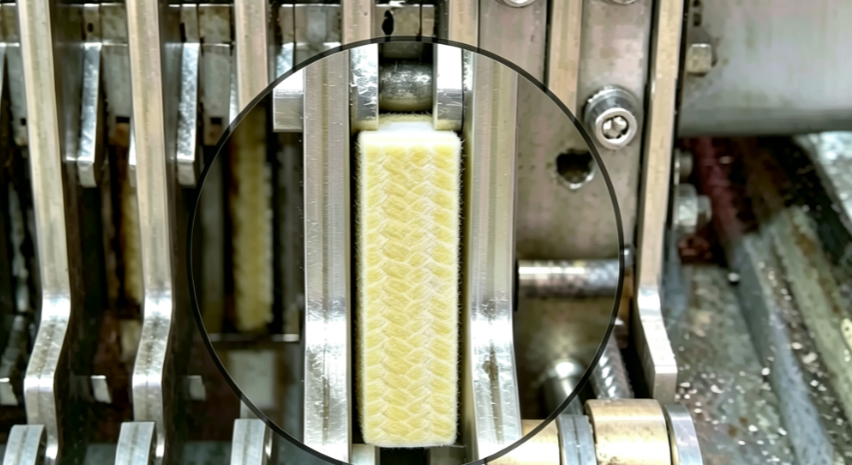
Aramid Wire Wipes for Galvanized Steel Wire
The relationship is direct: wire wipe → contact with galvanized wire → wiping condition → zinc coating result.
A 2026 study in Materials examined the wiping process of hot‑dip galvanized steel wire, comparing different wiping methods and measuring their effects on zinc coating thickness and microstructure [2]. The study found that the wiping method significantly influenced the final coating characteristics. The study did not evaluate SUNPASS aramid wiping pads, but it provides independent evidence that the wiping process itself can affect galvanized‑wire coating characteristics.
The key takeaway: the wiping pad is not simply a consumable cleaning material. Its condition is part of the coating‑control process.
| Production / Pad Observation | What to Check |
|---|---|
| Zinc coating becomes uneven | Pad condition and alignment |
| Excess zinc remains on the wire | Wiping condition |
| Wiping contact changes | Pad position and wear |
| Working surface shows visible wear | Pad condition |
| Pad surface becomes damaged | Whether turning the pad is possible |
| Coating result changes during production | Pad + process conditions |
Important: a coating change does not automatically prove that the wiping pad is worn out. Check the wiping system and relevant process conditions before replacing the pad.
Step 1 — Inspect the working surface. Look for visible wear, uneven wear, damage, zinc accumulation, and changes in the contact surface.
Step 2 — Check the pad position. Confirm that the wire still passes through the pad in its normal position.
Step 3 — Check the wiping condition. Compare the current wiping setting with the plant’s established production setting. Do not rely on an unverified pressure or speed figure.
Step 4 — Check the wire coating. Verify coating mass, coating thickness, coating uniformity, and surface appearance against the plant’s specification. ISO 7989‑2:2021 covers the mass per unit area of zinc/zinc‑alloy coating and related testing [1].
Yes. An aramid wiping pad can be turned over for continued use when the opposite working surface remains usable. Before turning the pad, inspect the working surface and the condition of the pad. After turning, confirm that the pad is correctly positioned and that the wire passes through the wiping area normally. Turning the pad allows the opposite working surface to be used before replacement. It should not be treated as a substitute for replacement when both working surfaces are worn or damaged.
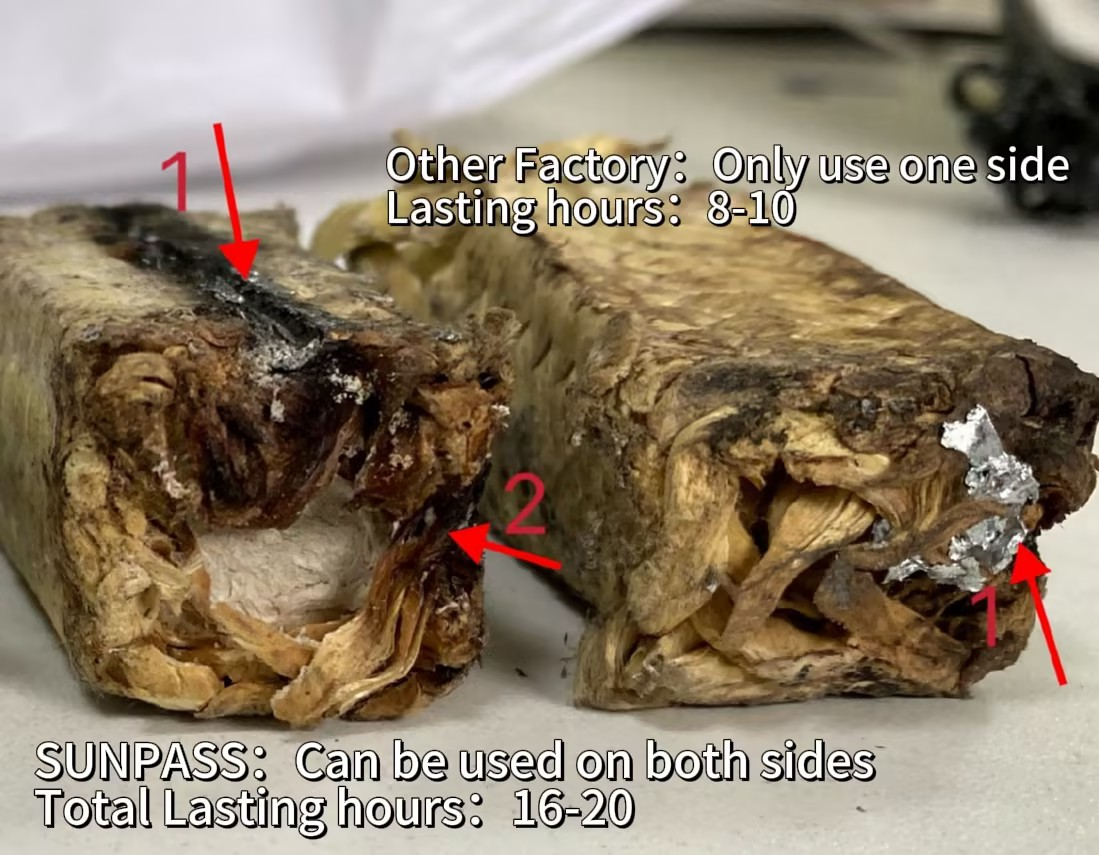
Aramid wire wipes do not have one universal replacement interval. Service life depends on the production conditions and the condition of the wiping pad. No single hour‑based figure applies across different lines, wire diameters, or coating requirements.
The practical approach is to keep your own service‑life record per pad:
Tracking these records over several pads will give you plant‑specific data far more reliable than a generic interval.
Factors to monitor include:
Monitor these factors rather than relying on a fixed lifetime claim. The right inspection frequency depends on your line conditions.
Available 6500FG product parameters:
| Parameter | 6500FG |
|---|---|
| Material | Aramid fiber processed with PTFE emulsion, lubricant and fiberglass |
| Model | 6500FG |
| Pressure | 70 / 100 / 100 bar* |
| Speed | 20 / 1.5 / 2 m/s* |
| pH | 2–12 |
| Temperature | −180°C to +260°C |
| Density | 1.45–1.50 g/cm³ |
| Size | 1/4″–2″ / 6–50 mm |
| Application | Hot‑dip galvanizing equipment |
* The original 6500FG technical data lists multiple pressure and speed values without specifying the corresponding operating conditions. Please confirm the applicable value with SUNPASS for your specific application.
These are the available product parameters for SUNPASS 6500FG aramid material. The product documentation lists hot‑dip galvanizing equipment among its applications. For galvanized‑wire wiping applications, pad dimensions and operating conditions should be confirmed according to the actual production setup.
When ordering a replacement, provide the supplier with:
SUNPASS Sealing manufactures the 6500FG aramid wiping pad from aramid fiber processed with PTFE emulsion, lubricant and fiberglass, and supplies it for hot‑dip galvanizing equipment. The company has production‑side experience with pad inspection and pad turning in continuous galvanized wire lines. For a replacement aramid wire wipe, send your wire diameter, existing pad size, and application conditions to the SUNPASS team for confirmation.
Need a replacement aramid wire wiping pad? Send your wire diameter, existing pad size, and application conditions to the SUNPASS for confirmation.
Q1. When should an aramid wire wipe be replaced?
When the pad can no longer maintain the required wiping condition, or shows significant wear or damage that cannot be resolved by turning.
Q2. How often should galvanized wire wiping pads be replaced?
There is no universal interval. Inspect by surface condition, wiping performance, and coating result, and keep your own service‑life records.
Q3. Can worn wire wipes affect zinc coating uniformity?
Yes. Wiping condition directly influences the final zinc coating. Uneven coating is a sign to inspect the pad and the wiping system.
Q4. Can an aramid wiping pad be turned over and reused?
Yes, if the opposite working surface remains usable. Turning extends pad life without changing the wiping setup.
Q5. What should I check before replacing a wire wipe?
Working surface condition, pad position, wiping setting, and the resulting wire coating.
Q6. What information should I provide when ordering aramid wire wipes?
Wire diameter, existing pad dimensions, production application, line speed, operating temperature, coating requirement, current pad construction, photos, and whether the pad is being turned over.
[1] ISO. ISO 7989‑2:2021 — Steel wire and wire products — Non‑ferrous metallic coatings on steel wire — Part 2: Zinc or zinc‑alloy coatings. https://www.iso.org/standard/74866.html
[2] The Impact of the Wiping Process on the Final Characteristics of Hot‑Dip Galvanized Steel Wires. Materials, 2026. https://pmc.ncbi.nlm.nih.gov/articles/PMC13027415/
[3] Wire Wipes. Technical Data — Industry Reference for Wire Wipe Construction and Sizing. https://wirewipes.com/technical‑data/
Sunpass Sealing Technology (Zhejiang) Co. LTD
• Zhejiang Top Sealing and Insulation Co.,Ltd.
• Echo Industry Limited
• Tenglong Sealing and Thermal Insulation Manufactory
 Add: No. 78 West Road Zhenxing, Lianghui Industry Zone, Yuyao, Zhejiang, China
 Tel: +86 574 62837603
 E-mail: sales@sealings.cn