



A material name can hide a meaningful choice. When a static joint must deal with difficult media and a less-than-perfect sealing face, the question is not simply whether PTFE is chemically suitable; it is whether the sheet can make and retain contact at the load the joint can safely provide. That is where expanded PTFE and conventional PTFE sheets begin to diverge.
Both materials are based on polytetrafluoroethylene, so they share the chemical-resistance logic that brings PTFE into many industrial sealing discussions. The useful distinction is structural. Conventional PTFE sheet is comparatively dense, while an expanded PTFE sheet has a stretched node-and-fibril structure that creates a softer, more compressible body.
That expanded structure does not turn ePTFE into a different polymer. It changes how the sheet responds when a flange, cover, or housing presses on it. SunPass Sealing's expanded sheet is made from 100% PTFE and is offered in a density range of 0.65 to 0.95 g/cm³, a practical indication that the material is not intended to behave like a dense machined PTFE plate.
Joint performance depends on contact, not on a material label. An expanded sheet can settle into fine machining marks and minor face irregularities with less compression than a firmer stock sheet may need. That makes it relevant when available bolt load is limited or when the mating faces are serviceable but not perfectly uniform.
Conformability is valuable only within a sound joint design. It can reduce small unsealed paths at the interface, but it cannot correct distortion, deep corrosion, poor flange alignment, or an uncontrolled tightening sequence. A joint with serious damage needs repair before any sheet material is asked to carry the sealing burden.
The practical trade-off is simple: softer contact can be helpful, while denser sheet can be preferable where rigidity and dimensional stability dominate the job. For the supplied expanded sheet, listed compressibility and recovery values are 45% and 15%, respectively. Those figures are useful for a design conversation, but they do not replace testing the actual flange load and operating cycle.
|
Decision point |
Expanded PTFE material |
Conventional PTFE sheet |
|
Structure |
A PTFE-based sheet with an expanded, porous microstructure. |
A denser PTFE sheet with less internal void space. |
|
Joint contact |
Useful where a static joint needs conformability at moderate compression. |
Useful where a firmer sheet and stable geometry are the stronger priorities. |
|
What to verify |
Media, temperature, bolt load, surface finish, and permeation tolerance. |
Media, temperature, load, machining need, and the effect of creep in service. |
Semiconductor manufacturing is a strong example of where the difference between expanded PTFE and conventional PTFE becomes practical. In wet-process equipment, chemical delivery systems, equipment covers, and selected exhaust or duct connections, static seals often need both strong chemical resistance and reliable contact under controlled flange load. Expanded PTFE is well suited to these conditions because its conformable structure can help establish a continuous sealing interface while retaining the chemical-resistance advantages of PTFE.
For semiconductor equipment, ePTFE sheet is a practical sealing material for static joints where chemical resistance, conformability, and dependable sealing at moderate compression are priorities. Common applications include wet-process equipment covers, liquid-chemical system flanges, service panels, and selected exhaust or duct connections.
Selection should then be matched to the actual process envelope. Confirm the chemical and concentration, operating temperature, pressure or vacuum level, flange condition, flange type and tightening conditions, and the fab or equipment maker's requirements for cleanliness, extractables, ionic contamination, and permeation. When these conditions are defined, the sheet density, thickness, and converted gasket geometry can be matched to the actual joint and semiconductor process requirements.

A drawing turns a material choice into a repeatable component. For a semiconductor RFQ involving customized expanded PTFE, send the sealing drawing or joint dimensions together with the required thickness, sealing width, inner and outer dimensions, and bolt pattern. Also identify the process chemical and concentration, operating temperature, pressure or vacuum, flange type and tightening conditions, and any customer-specified requirements for cleanliness, extractables, ionic contamination, permeation, packaging, or traceability.
With those details, SunPass Sealing can review the required sheet form and converted geometry against the actual joint instead of asking the customer to select an ePTFE configuration from a general catalog alone.
When the duty calls for a sheet-derived part, consistency in supplied stock, cutting, and protective packing matters because a small dimensional change can alter the joint's contact pattern. This is a conversion discussion, not a reason to blur sheet stock with tape or a ready-made gasket.
For projects that need custom ePTFE products, SunPass Sealing can develop and produce against drawings or samples after the joint conditions are defined. That role is most useful after the engineering team has narrowed the service envelope, not before.
Expanded PTFE and conventional PTFE sheets share a PTFE foundation, yet their structure leads to different expectations at a static joint. ePTFE earns consideration when conformability and moderate compression are central; dense PTFE sheet may remain the better fit when a firmer, more dimensionally stable stock form is required.
The best next step is to document the joint: medium and concentration, temperature, pressure or vacuum, surface condition, available bolt load, cleanliness requirements, and required cut profile. For semiconductor applications, include any project-specific limits for extractables, ionic contamination, permeation, packaging, or traceability so that the material and converted part can be reviewed against the complete process requirement.
SunPass Sealing can use that information to recommend an appropriate expanded PTFE sheet format, thickness, and converted geometry for the application. Send a drawing or joint dimensions together with the operating conditions to start the RFQ review.
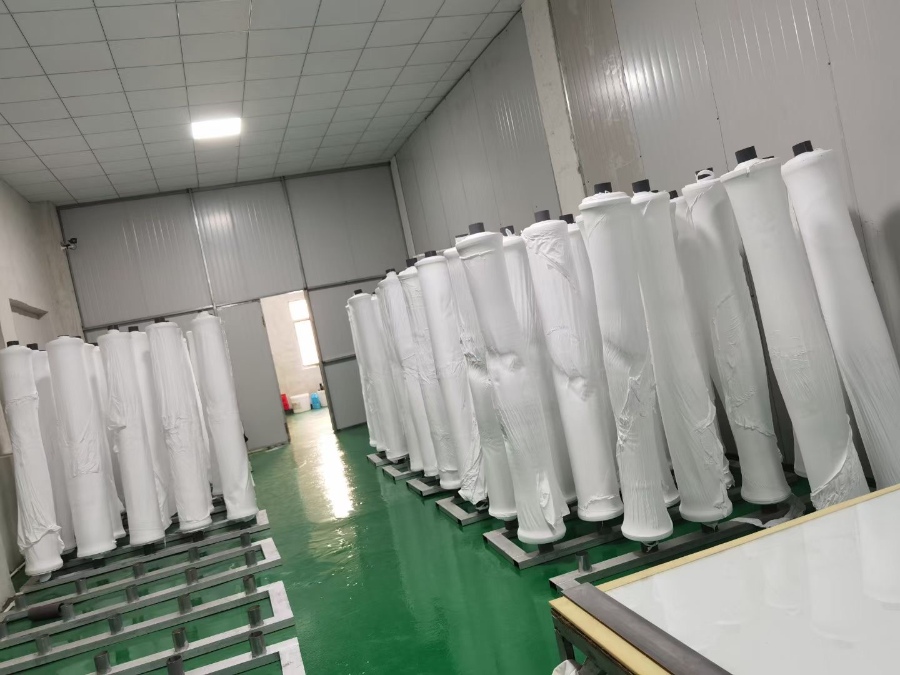
Both are PTFE-based, but expanded PTFE has a porous, stretched microstructure. That structural difference can make it softer and more conformable than a conventional dense PTFE sheet.
No. Sheet is a stock material that can be cut into a gasket or other static-sealing profile. The final part still needs dimensions that match the actual flange, cover, or housing.
Yes. Expanded PTFE sheet is well suited to selected static sealing points in semiconductor wet-process equipment, liquid-chemical systems, equipment covers, and selected exhaust or duct connections, particularly where chemical resistance and conformity at moderate flange load are important. For final selection, provide the chemical and concentration, temperature, pressure or vacuum, joint dimensions, flange type and tightening conditions, and any project-specific requirements for cleanliness, extractables, ionic contamination, and permeation.
A denser PTFE sheet may be preferable when the application places more value on firmer stock, dimensional stability, or a specific machining requirement than on surface conformity.
Sunpass Sealing Technology (Zhejiang) Co. LTD
• Zhejiang Top Sealing and Insulation Co.,Ltd.
• Echo Industry Limited
• Tenglong Sealing and Thermal Insulation Manufactory
 Add: No. 78 West Road Zhenxing, Lianghui Industry Zone, Yuyao, Zhejiang, China
 Tel: +86 574 62837603
 E-mail: sales@sealings.cn