


Heat-treated and standard fiberglass cloth start from the same continuous-filament glass base and differ mainly at the surface. Heat-treated cloth has been run through an oven after weaving to burn off most of the organic sizing; standard cloth keeps its loom-state finish. The comparison turns on first-heat smoke and organic residue, retained strength, the published temperature data, and how each type behaves in the actual process. A typical heat-treated cloth is set against a standard fabric below, with the treatment described at a level that holds for the cloth family rather than one special grade.
Fiberglass yarn normally carries sizing or lubricant that protects filaments during weaving. A controlled oven cycle after weaving decomposes or removes much of that organic finish. The glass fiber remains the same basic reinforcement; the treatment changes its surface condition, color, handling, and behavior during initial heating.
Treatment names require careful definition. Some suppliers use “heat treated” for partial burnout, often called caramelizing, which leaves limited residue to stabilize the weave. Full heat cleaning aims to remove essentially all organics for a cleaner substrate. A tan appearance may indicate thermal processing, but color alone does not prove residual-organic content or service performance.
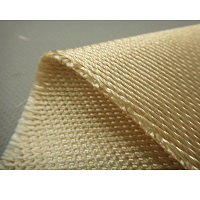
Standard loom-state fabric can release smoke or odor when its organic sizing first encounters elevated temperature. That startup effect may be unacceptable inside enclosed equipment, clean production areas, electrical assemblies, or reusable insulation systems. In those cases, heat treated fiberglass cloth addresses a defined operating problem before installation.
Heat treatment reduces the organic contribution from the textile, but it does not create a certified fire barrier by itself. The completed assembly still needs an application-specific temperature rating, ventilation review, fastening design, and any required flame, smoke, or hot-work qualification. Fabric treatment is one input to that system, not the entire safety case.
Organic burnout can weaken fibers and loosen the weave, so retained properties matter more than the treatment label. Comparable construction data help separate the surface-treatment effect from changes in yarn, weave, mass, or thickness. Where qualification is critical, test the actual grade after the specified exposure rather than relying on a generic fiberglass limit.
| Specification point | A typical heat-treated cloth | Standard SP3784 fabric |
| Weave | Satin | Satin |
| Nominal thickness | 0.8 mm (0.03 in) | 0.8 mm |
| Nominal mass | 880 g/m² (26 oz/yd²) | 850 ± 30 g/m² |
| Available width | 1.0–1.5 m | 1.0–2.0 m |
| Published thermal data | 550°C maximum continuous temperature | Confirm for the ordered grade |
A typical heat-treated cloth provides a useful retained-strength example. Its initial tensile values are listed as 630 lb/in in warp and 490 lb/in in fill. After three hours at 700°C, the listed values are 360 lb/in and 240 lb/in. That 700°C exposure is a test condition, not the 550°C continuous service rating, and the difference should remain explicit in a purchase specification.
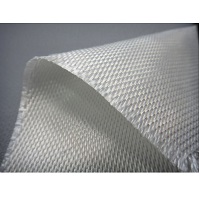
Standard fabric is often suitable when the original finish is acceptable, first-cycle smoke can be controlled, and no chemically clean bonding surface is required. Continuous-filament products offer a smooth surface and stable construction for insulation, reinforcement, filtration, and compatible coating processes. A plain weave fiberglass cloth may also provide good dimensional stability at a lighter mass.
Construction should follow the job rather than a broad material name. The SP series illustrates the range: SP7628 is a 0.23 mm plain weave at 200 ± 20 g/m², SP3732 is a 0.43 mm twill at 450 ± 20 g/m², and SP3784 is a 0.8 mm satin at 850 ± 30 g/m². These differences affect drape, coverage, handling, and reinforcement behavior.
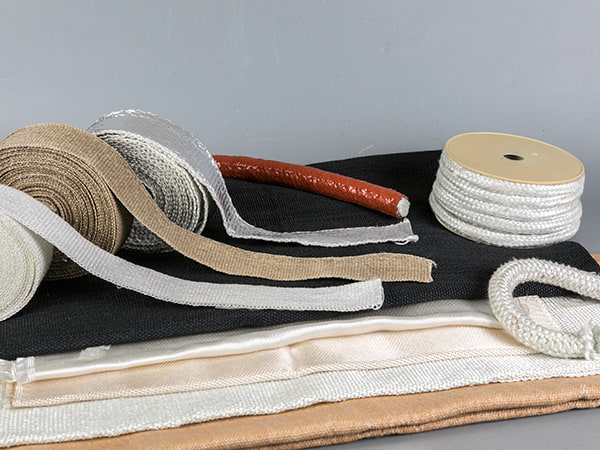
Heat treatment earns its cost where surface organics create a measurable process risk. Examples include removable insulation near sensitive equipment, first-heat commissioning in occupied or enclosed areas, and substrates prepared for coatings or laminates that are incompatible with the original sizing. Buyers evaluating high temperature fiberglass cloth should state which of these outcomes they actually need.
Coating work needs the most precise language. A partially caramelized cloth may retain enough finish to improve handling, while a fully heat-cleaned cloth offers a cleaner bond surface but may fray more easily. Neither condition should be assumed from color or marketing terminology. Specify the permitted residue, downstream chemistry, and any adhesion test that governs acceptance.
A useful wholesale specification connects the treatment to verifiable product data. It should identify:
1.Base glass and yarn type, including continuous filament or texturized yarn.
2.Heat-treatment definition, processing objective, and acceptable residual organics.
3.Weave, thickness, mass per area, roll width, roll length, and dimensional tolerances.
4.Continuous service temperature separately from short-duration exposure or test temperature.
5.Initial and post-exposure tensile data when mechanical retention affects the assembly.
6.First-heat smoke expectation, coating compatibility, edge treatment, and packaging requirements.
Sunpass, founded in 1979, lists each heat-treated grade with its treatment, satin weave, thickness, mass, width, continuous temperature, and retained tensile data. That combination shows the right buying discipline: approve the actual data sheet and sample for the intended fabrication process, then freeze the accepted construction for repeat orders.
Specify heat-treated cloth when reduced first-heat smoke, lower organic residue, or a cleaner secondary-processing surface is an explicit requirement. Choose standard cloth when its finish is compatible and construction stability, retained strength, availability, or cost carries more weight. In either case, compare equivalent weave and mass, separate continuous ratings from exposure tests, and make the supplier document the finished grade—not just the glass fiber family.
No. The process changes sizing and surface condition; it does not change the glass chemistry. Temperature capability must be verified for the exact finished fabric and assembly.
Organic sizing, lubricants, or binders used during yarn manufacture and weaving can decompose during initial exposure. The amount depends on the finish and the actual temperature cycle.
Not necessarily. Caramelizing generally means partial thermal decomposition with some residue retained for stability. Full heat cleaning targets a substantially cleaner surface and may require more careful handling.
Yes, provided the treatment level and coating chemistry are compatible. Ask the supplier to confirm residual organics and validate adhesion on the actual cloth grade before production.
Request weave, yarn type, thickness, mass, width, treatment definition, continuous and short-duration temperatures, tensile values, tolerances, roll format, and any required smoke or coating-adhesion test.
Sunpass Sealing Technology (Zhejiang) Co. LTD
• Zhejiang Top Sealing and Insulation Co.,Ltd.
• Echo Industry Limited
• Tenglong Sealing and Thermal Insulation Manufactory
 Add: No. 78 West Road Zhenxing, Lianghui Industry Zone, Yuyao, Zhejiang, China
 Tel: +86 574 62837603
 E-mail: sales@sealings.cn