


A manhole seal must stay elastic while facing chemical attack, repeated opening, thermal swings, and pressure changes. The Super Tank Seal answers that combined problem with a resilient EPDM core and a three-sided virgin PTFE cover. This article explains why the structure matters, where the limits sit, and how trade buyers can connect the seal choice with real tank service.
The central design decision is to separate resilience from chemical exposure. EPDM supplies compression recovery and helps the ring follow small surface irregularities. Virgin PTFE forms the sealing skin and inner diameter, limiting contact between the media and the rubber core. That division gives a tank seal two useful behaviors instead of asking one material to do everything.
The PTFE surface is non-absorbent and low-friction, so residue is less likely to remain trapped after cleaning. The EPDM core continues to push the cover into the groove after the manlid has been clamped for a long period. In practical terms, the composite can tolerate repeated opening and closing better than a rigid solid PTFE ring while resisting media that would swell ordinary rubber.
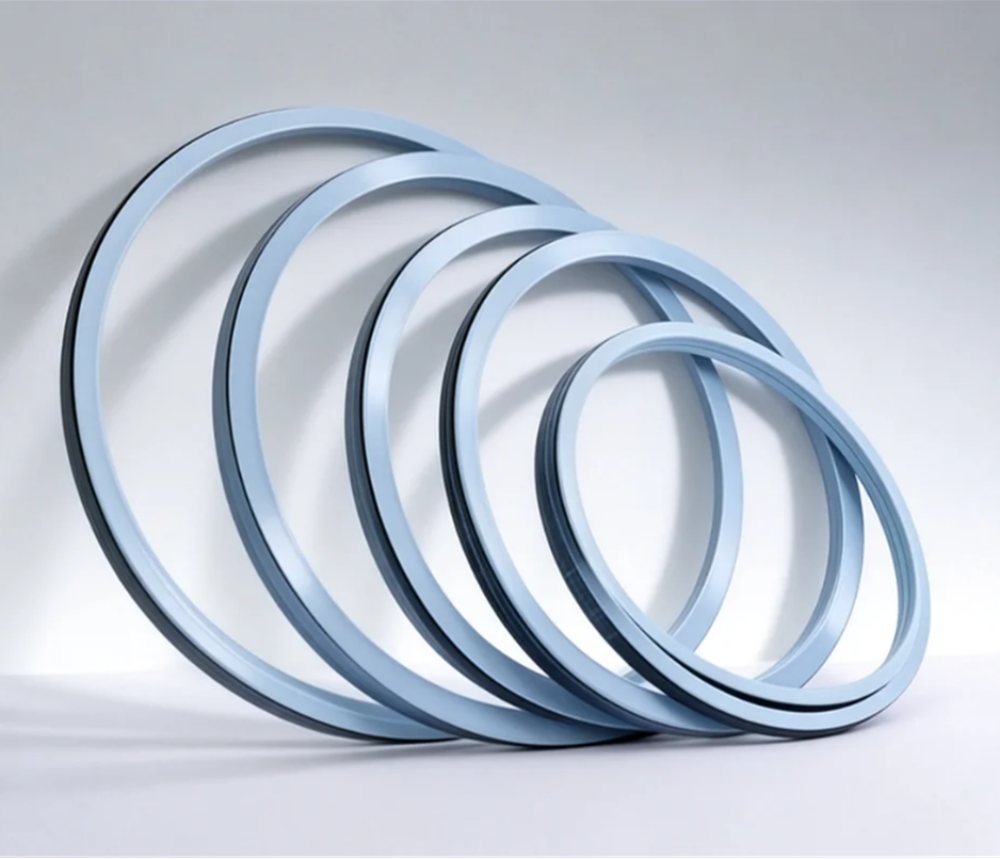
Chemical range is the first screening point for a manlid gasket. The PTFE-covered faces are intended for media across pH 0-14, including chemical, food, and edible-oil service when the complete tank system is suitable. This does not remove the need to confirm the exact cargo, cleaning agent, and operating temperature before release.
Mechanical cycling is the second test. A manhole cover is opened for filling, sampling, cleaning, and inspection; every cycle can abrade a sealing surface or expose a weak joint. The low-friction PTFE cover reduces opening wear, while the EPDM core restores contact pressure after the cover is re-clamped.
Temperature and pressure are the third test. The product information gives a working temperature range of -50°C to +150°C and a maximum tank-container pressure of 6 bar for the stated design. These values are selection boundaries, not permission to ignore the tank maker procedure, compression ratio, or media-specific rules.
A purchasing team can turn the structure into a short acceptance conversation. Ask for the PTFE material route, EPDM formulation control, cross-section, inner diameter, and the inspection points used on each production batch. The goal is traceable fit and stable sealing, not a long list of disconnected claims.
1.Confirm the nominal DN and cross-section before comparing prices.
2.Check that the PTFE layer is continuous on the sealing face, top, bottom, and inner diameter.
3.Match the cargo and cleaning chemistry with the intended material combination.
4.Record compression, visible damage, and leak-test results at receipt and after service.
The table below keeps the most important comparison visible for a distributor or tank-container manufacturer.
| Design option | Resilience after clamping | Chemical-contact behavior | Typical concern |
| EPDM-only seal | Good initial recovery | Limited by cargo and solvent compatibility | Swelling or aging |
| Solid PTFE seal | Low elastic recovery | Very broad chemical resistance | Cold flow and loss of contact |
| EPDM core with PTFE cover | Recovery from EPDM plus PTFE surface protection | Broad pH 0-14 target range | Correct compression and fit remain essential |
A seal decision becomes easier when the surrounding spare-parts plan is coherent. SunPass supplies super tank seal alongside ptfe manlid seal and ptfe envelope gasket options for the same trade audience, so a buyer can align manlid dimensions, cleaning needs, and replacement timing instead of treating the gasket as an isolated line item.
The relevant manhole-seal family includes Super Tank Seal, PTFE Manlid Seal, Pure PTFE Manlid Seal, Rubber Seal, O Ring, Metal winding pad, Pure EPDM Gasket, and Natural Rubber Seal. Each option has a different balance of recovery, chemical resistance, cleanliness, and cost; the correct choice follows the cargo and cover design.
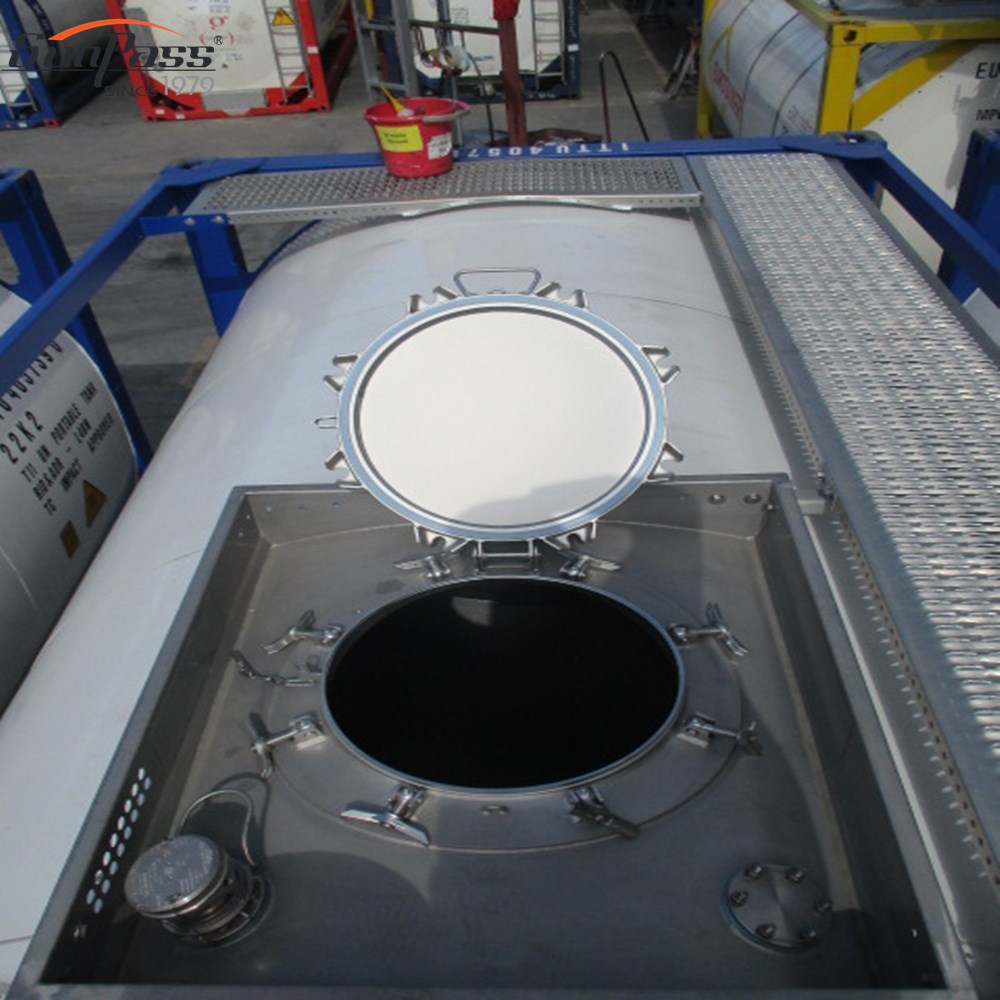
Food and edible-oil service makes cleanliness part of sealing performance. FDA food-grade PTFE, sourced with EPDM and PTFE from leading domestic raw-material factories, supports a non-absorbent contact surface. The user still needs a validated cleaning method and a tank system that is approved for the media.
Chemical service places more weight on inertness and dimensional stability. The PTFE cover is designed to resist strong chemical reactions, while the EPDM core supplies the rebound that a pure PTFE ring lacks. High-pressure vacuum equipment and more than two decades of mature processing help keep the composite geometry consistent during molding.
Sunpass Sealing is a high-quality supplier to globally renowned tank-container manufacturers, with a market presence in more than 60 countries. Our one-stop support combines regular-size stock, timely dispatch, an emergency-order channel, and technical selection assistance so distributors can respond to varied manlid requirements. SunPass is a one-stop tank container parts manufacturer since1979.
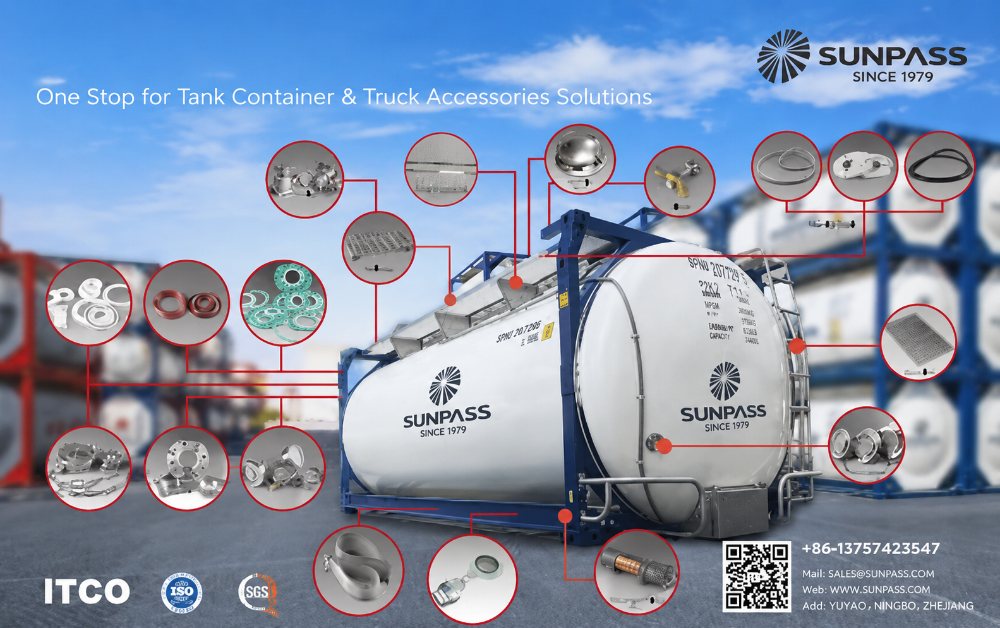
The Super Tank Seal works because its materials divide the job intelligently: EPDM maintains contact pressure and PTFE protects the media-facing surfaces. For wholesale selection, verify the media, cleaning chemistry, DN, cross-section, compression, temperature, and pressure together. That short evidence set is more useful than choosing by material name alone.
When the application is genuinely food, edible oil, chemical, or hazardous-chemical service, a documented fit check and a consistent replacement record protect both the load and the maintenance schedule. The practical next step is to share the manlid dimensions, cargo, cleaning cycle, and operating limits for a technically matched seal.
The PTFE surface targets pH 0-14 service, but the exact cargo, concentration, temperature, and cleaning chemistry must be checked against the complete tank system.
EPDM supplies elastic recovery and compensates for small surface irregularities, reducing the cold-flow risk associated with solid PTFE.
Confirm the tank maker, nominal DN, cross-section, inner diameter, groove shape, compression condition, and any non-standard drawing.
Repeated opening creates wear, but the low-friction PTFE cover and resilient core are designed to preserve contact when the cover is correctly clamped.
Provide a clear photo or drawing, cargo and cleaning media, temperature and pressure, quantity, and the required delivery window.
Sunpass Sealing Technology (Zhejiang) Co. LTD
• Zhejiang Top Sealing and Insulation Co.,Ltd.
• Echo Industry Limited
• Tenglong Sealing and Thermal Insulation Manufactory
 Add: No. 78 West Road Zhenxing, Lianghui Industry Zone, Yuyao, Zhejiang, China
 Tel: +86 574 62837603
 E-mail: sales@sealings.cn