


In chemical plant service, packing failures seldom stem purely from insufficient tensile strength; most issues arise from media incompatibility, poor installation or lubrication loss. Based on SUNPASS field case observations, one recurring pitfall is selecting sealing material relying on a single standout catalog property while overlooking real-world service conditions.
From SUNPASS-tracked field projects, we note onsite maintenance personnel apply distinct considerations when assessing aramid fiber packing. Aramid fiber packing is often selected for applications where mechanical strength, abrasion resistance and extrusion resistance are important. When the packing is combined with PTFE and an appropriate lubricant system, it can become a practical sealing solution for pumps, mixers, valves and other rotating or reciprocating equipment used in chemical processing.
Chemical plant pumps do not always handle clean liquids. Many services contain crystals, catalyst particles, suspended solids, pigments, mineral particles or process residues. Once those solids reach the stuffing box, the packing faces a dual problem: chemical exposure and mechanical wear.
This dual problem is the key to understanding where aramid fits. A packing chosen only for chemical resistance may fail mechanically when solids accelerate wear; a packing chosen only for strength may fail chemically when the fluid attacks the fiber. Based on SUNPASS field project experience, practical solutions rely on engineered packing construction considering both factors.
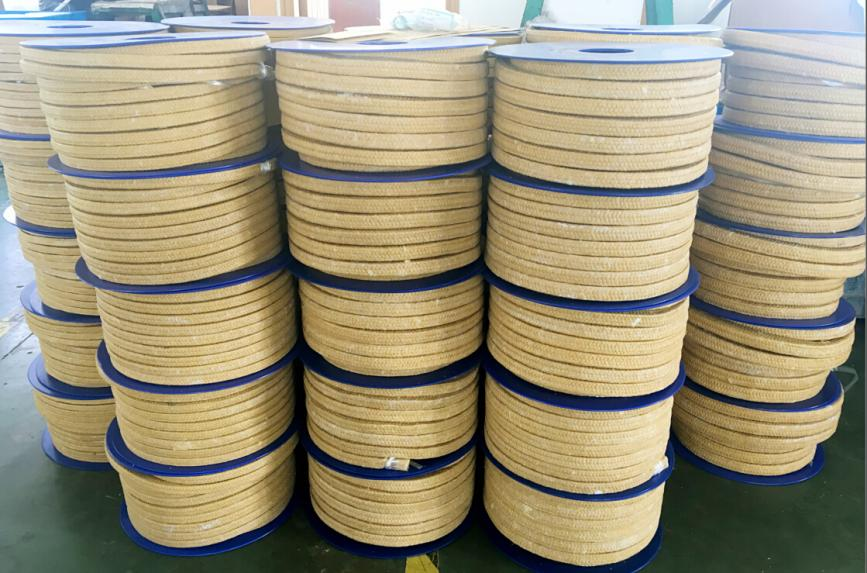
Our SUNPASS Aramid fiber packing produced from DuPont continuous filament Kevlar yarn, impregnated with PTFE emulsion and finished with specialty lubricant, combines exceptional mechanical strength for high-pressure operation up to 25 MPa and excellent resistance to aggressive chemicals within pH 2–13, delivering 2–3 times longer service life than standard braided packings for harsh demanding services.
Aramid fibers are known for their high strength, modulus, toughness and thermal stability. In a testing environment, SUNPASS aramid yarns demonstrate an average breaking tenacity of 18.87 cN/dtex and an initial modulus of 633 cN/dtex. In a packing system, high fiber strength provides a stronger structural backbone that helps the braid resist deformation, extrusion and mechanical damage when exposed to pressure, shaft movement or abrasive solids.
This is why aramid is attractive in mechanically aggressive service. Where solids, pressure and movement combine, the structural backbone becomes the difference between a packing that holds its shape and one that extrudes or wears through.
Aramid and PTFE should not be treated as competing materials. In many packing constructions, they perform different jobs:
SUNPASS features self developed and highly optimized impregnant formulation based on PTFE emulsion. Strict batch by batch inspections are performed on the solid content, particle size distribution, viscosity and stability of the PTFE based impregnant.
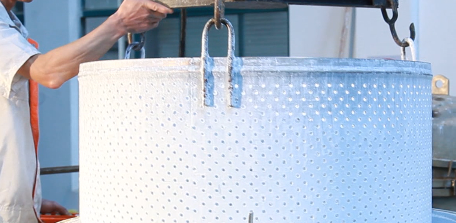
From SUNPASS field project observations, aramid-based gland packing for chemical plant service does not deliver universal chemical media compatibility. Its practical value originates from its inherent mechanical strength and abrasion-resistant substrate. Engineered configurations integrate PTFE impregnation and built-in lubrication systems to compensate for chemical compatibility and frictional performance gaps. Per field application experience, this hybrid construction fits intermediate severity duties.
SUNPASS ARAMID FIBER GLAND PACKING STYLE 6500 features comprehensive chemical tolerance within pH 2–12, resisting dilute sulfuric acid, dilute hydrochloric acid, sodium hydroxide solutions, organic solvents, hydrocarbons, alongside water, steam, oils and abrasive grit-filled media. It sustains dependable sealing under complex multi-media operating conditions across a wide scope of industrial uses.
Drawing on SUNPASS accumulated field project observations, aramid packing should not be qualified for service merely based on the “high strength” claim listed on its datasheet.
Start with the process fluid. What chemicals are present? What is the approximate concentration? Is the fluid oxidizing? Does the composition change during cleaning or process upset? Are solids present? What is the operating temperature? What shaft speed and pressure are involved?
Then check the packing construction. Is the aramid located mainly in the corners for abrasion resistance? Is the entire yarn impregnated with PTFE? What lubricant is used? Is the packing intended for a pump, valve, mixer or reciprocating service? Is the product designed for dry running during start-up, or is flush water required?
With long-term manufacturing background, SUNPASS develops multilayer packing structures intended to restrict gas, liquid and dust penetration within rated operating limits. Standardizing this production process reduces yarn breakage during weaving by over 30% . Targeting controlled leakage performance for long-cycle service, our offering includes structural information, samples and application-specific technical consultation.
SUNPASS selects high-quality fiber raw materials from reliable global suppliers to ensure stable yarn performance.
For every batch of raw fibers, we strictly control key parameters including:
High-quality raw materials provide the foundation for excellent temperature resistance, pressure resistance, wear resistance, and chemical stability.
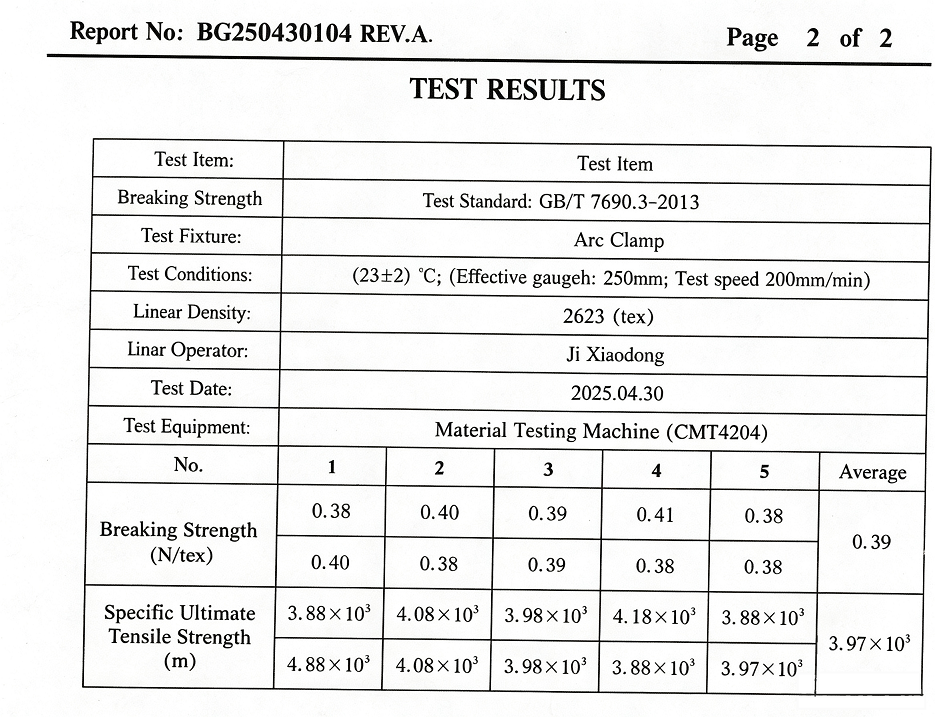
yarn performance TEST RESULTS
Our gland packing yarns are designed to perform reliably in demanding industrial environments, including:
With good flexibility and dimensional stability, SUNPASS yarns maintain their structure during long-term operation and can be easily braided into different types of gland packing products.
Stable raw materials need professional manufacturing processes.
SUNPASS controls every step of yarn production, from impregnation to final finishing.
We independently develop and optimize impregnation formulas using:
Each batch of impregnation materials is carefully tested for:
This ensures uniform coating and consistent lubrication performance.
The result is:
Compared with ordinary yarns, our standardized production process reduces yarn breakage during weaving by more than 30%, helping packing manufacturers improve production efficiency and reduce material waste.
SUNPASS gland packing yarns are supported by complete quality documentation, including:
Every production batch is traceable to ensure stable quality for long-term cooperation.
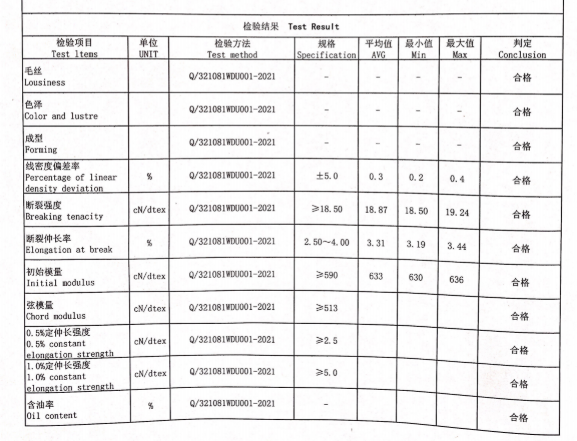
Our yarn performance has been verified through professional testing:
High-temperature strength performance
At 250℃ continuous temperature testing:
After 50 repeated bending tests, SUNPASS yarns maintain good structure without breakage or excessive fuzzing.
SUNPASS provides complete support from material selection to long-term cooperation.
Technical recommendation
Our engineers help customers select the right yarn according to:
Stable quality supply
We provide:
to support reliable long-term cooperation.
Fast delivery support
With regular stock of common yarn specifications and efficient production management, SUNPASS can support urgent orders and shorten delivery time.
Customized Solutions
SUNPASS provides OEM and customized yarn solutions for:
Is aramid packing suitable for all chemical services?
No. Aramid excels where mechanical strength and abrasion resistance matter, but it is not immune to strong acids and bases. Always evaluate the complete construction — aramid type, PTFE treatment and lubricant — against the actual fluid, concentration and temperature.
Is aramid packing better than PTFE packing?
They solve different problems. Aramid provides mechanical strength and abrasion resistance; PTFE provides chemical resistance and low friction. Many high-performance chemical-plant packings combine both.
Can aramid packing handle abrasive slurries?
Yes. Abrasive and slurry service is where aramid's mechanical backbone is most valuable.
DuPont / Arclin, Kevlar® Aramid Fiber Technical Guide — fiber properties, hydrolytic stability and pH effects
A.W. Chesterton, 1727 Multi-Lon™ Packing — chemical resistance, construction and application limits
Garlock, Style 1947 Compression Packing — meta-aramid/PTFE construction and chemical-processing applications
ISO 15848-1:2015 — international framework for testing fugitive emissions from industrial valve stem seals
Sunpass Sealing Technology (Zhejiang) Co. LTD
• Zhejiang Top Sealing and Insulation Co.,Ltd.
• Echo Industry Limited
• Tenglong Sealing and Thermal Insulation Manufactory
 Add: No. 78 West Road Zhenxing, Lianghui Industry Zone, Yuyao, Zhejiang, China
 Tel: +86 574 62837603
 E-mail: sales@sealings.cn