


Frequent packing replacement is rarely caused by the packing itself. In most cases, it is related to factors such as material selection, installation quality, operating conditions, equipment condition, and maintenance practices. Abrasive particles in the fluid can accelerate wear, excessive friction can generate heat and damage the packing, chemical changes in the process media can cause material failure, and mechanical issues such as shaft damage, misalignment, or excessive runout can prevent effective sealing.
Fix those things, and packing life goes from weeks to months, sometimes years. Ignore them, and you will keep throwing money at the symptom while the real problem gets worse.
This article is written from the field, not from a textbook. The numbers and standards I reference come from real specifications I have used: API 610 (the 2021 12th edition), API 682 (the 2022 reprint of the 4th edition), GB/T 13007 for pump testing in China, and the installation guidelines published by the Fluid Sealing Association. But more importantly, the problems and solutions come from actual plants, actual pumps, and actual failures I have walked through with maintenance teams.
Before you order anything, document the actual operating envelope. Not the design envelope, the actual one. Measure the fluid temperature at the stuffing box during peak load, not during startup. Check the pressure when the pump is at full flow. Note the shaft surface speed. Get the chemical composition from the process engineer, not from the original pump datasheet. Then match those numbers to the material ratings.
Here is what the major materials can handle in practice, based on manufacturer data sheets and API 682 guidance. Use these as a starting point, but always confirm with your specific supplier because grades vary.
|
Material |
Max Temperature |
Max Pressure |
Max Speed |
Best Suited For |
|
PTFE (Teflon) |
260°C |
20 bar |
10 m/s |
Chemical processing, food-grade, low-friction |
|
Graphite |
450°C |
40 bar |
20 m/s |
High-temp steam, thermal oils, hydrocarbons |
|
Aramid (Kevlar) |
260°C |
30 bar |
15 m/s |
Abrasive slurries, mining, high-wear |
|
Carbon Fiber |
350°C |
30 bar |
20 m/s |
High-speed pumps, boiler feed |
|
Acrylic |
150°C |
10 bar |
8 m/s |
General water service, low-cost |
|
Graphite + Inconel Wire |
650°C |
50 bar |
25 m/s |
Extreme temperature, high-pressure steam |
SUNPASS offers the following services during the purchasing process for packing products:
API 682 defines sixteen different flush plans for managing stuffing box conditions, ranging from simple recirculation to complex barrier fluid systems. You do not need the most elaborate plan on the chart. For many hot or dirty services, even a basic flush of cool, clean fluid into the stuffing box can double or triple packing life by dropping the temperature and washing away abrasives.
For abrasive services, a lantern ring with external clean water injection creates a barrier fluid layer that keeps solids away from the packing interface. In severe cases, switching to a split mechanical seal may be justified, but that is a capital project. Start with the flush. It is cheap, fast, and often transformative.
This is the single most destructive habit in packing maintenance: tightening until the leak stops. The Fluid Sealing Association has been clear about this for decades. Compression packing requires controlled leakage. That small flow of fluid removes friction heat and maintains lubrication between the packing and the shaft. Eliminate the leak entirely, and you eliminate the cooling. The packing carbonizes, the shaft scores, and you are back to square one with damage that costs far more than a few drips.
The standards give you the numbers. API 610, 12th edition, says clear water service should not leak more than 10 drops per minute. Chinese chemical industry maintenance standards documented by the China Association of Petrochemical Equipment Management allow up to 20 drops per minute initially for water, rising to 40 as the packing wears in. GB/T 13007, the Chinese centrifugal pump test standard, permits up to 60 drops per minute under rated test conditions. Petroleum and chemical integrity standards are tighter: 20 drops per minute for light oil, 10 for heavy oil.
These numbers are not arbitrary. They are the equilibrium point where the packing seals effectively without overheating. Use a torque wrench, not a pipe wrench or an impact gun. Tighten the gland nuts in a cross pattern, one-sixth to one-quarter turn at a time, and wait 15 to 20 minutes between adjustments to let the packing settle. Check the stuffing box temperature after each step.
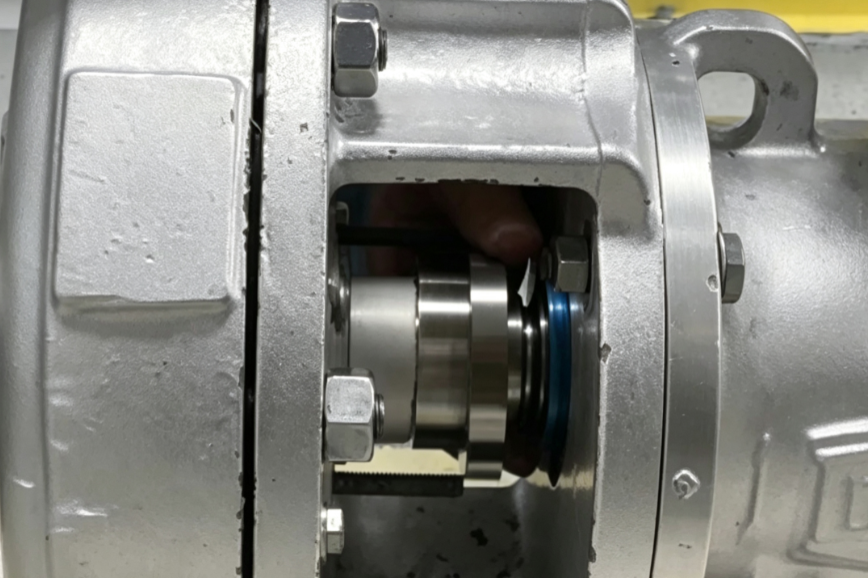
The FSA publishes a laminated pocket guide called the Pump and Valve Packing Installation Procedures, and I keep a copy in my toolbox. It is not glamorous, but it works. The core steps are straightforward: clean the stuffing box completely, measure everything before you cut, stagger the joints by 90 degrees, seat each ring with a tamping tool, and hand-tighten the gland before starting the break-in sequence.
Cross-section size matters more than most people think. The formula is simple: stuffing box bore diameter minus shaft diameter, divided by two. That is your packing cross-section. Undersized packing cannot expand enough to seal. Oversized packing requires crushing force that damages both the packing and the shaft.
Set a schedule based on operating severity. For continuous-duty clean water pumps, check torque weekly for the first month after installation, then every two to four weeks. For abrasive slurry pumps, check every one to two weeks. For high-temperature service above 150 degrees Celsius, check weekly. Record the numbers: torque, leakage rate, stuffing box temperature. A maintenance log with three months of data will show trends that no single measurement can reveal.
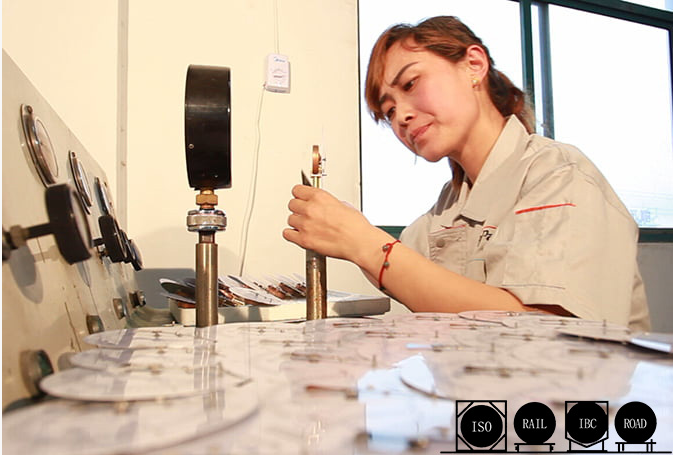
We also offer monitoring tools. SUNPASS Durable Industrial Pressure Gauge is the heavy-duty solution for continuous pressure monitoring. Featuring a rugged, weather-resistant stainless steel case and hermetically sealed internal mechanisms, this gauge is built to endure the punishing vibrations and corrosive exposures of demanding processing floors. By utilizing stabilized pointer movements and robust bourdon tube technology, it sustains consistent, repeatable precision over extended operational lifecycles, ensuring plant operators can secure total process peace of mind.
Do not just keep tightening. That is the mechanical equivalent of turning up the radio when your engine is making noise. Investigate. Is the shaft worn? Is the material wrong for the temperature? Are operating conditions drifting outside the packing's rating? The answer is almost always yes to one of those questions.
Qualified Supplier Management: We maintain a strict Qualified Supplier List by conducting comprehensive technical, production, and quality management system audits on core raw material suppliers of aramid fiber, carbon fiber, PTFE, and high-purity graphite. Engineered with high-density braiding matrices, our products exhibit exceptional mechanical wear resistance and thermal aging resistance, specifically developed for severe service industrial environments. The sealing components maintain mechanical integrity across a wide operating temperature range of -50°C to 280°C and withstand high-pressure differentials, demonstrating broad chemical compatibility across diverse process media (excluding strong oxidizing acids).
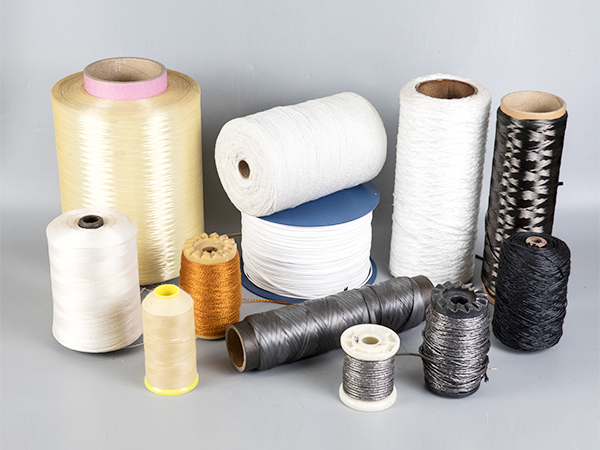
Batch Traceability System: All raw materials are integrated into a digital Batch Control System (BCS). Each lot is assigned a unique alphanumeric batch ID linked directly to its origin, material specifications, and Material Test Reports (MTR). This framework enables full-chain, bidirectional traceability from the finished sealing component back to the raw material synthesis or melt lot.
Process Control & Architecture: Manufacturing is overseen by an engineering team specializing in materials science and mechanical engineering, with all technicians trained and qualified under rigorous quality standard competencies. Utilizing an optimized multi-layered cross-braided configuration and high-resiliency substrates, the packing forms a high-density geometric barrier that effectively blocks potential leak paths for gases, volatile liquids, and abrasive particulates.
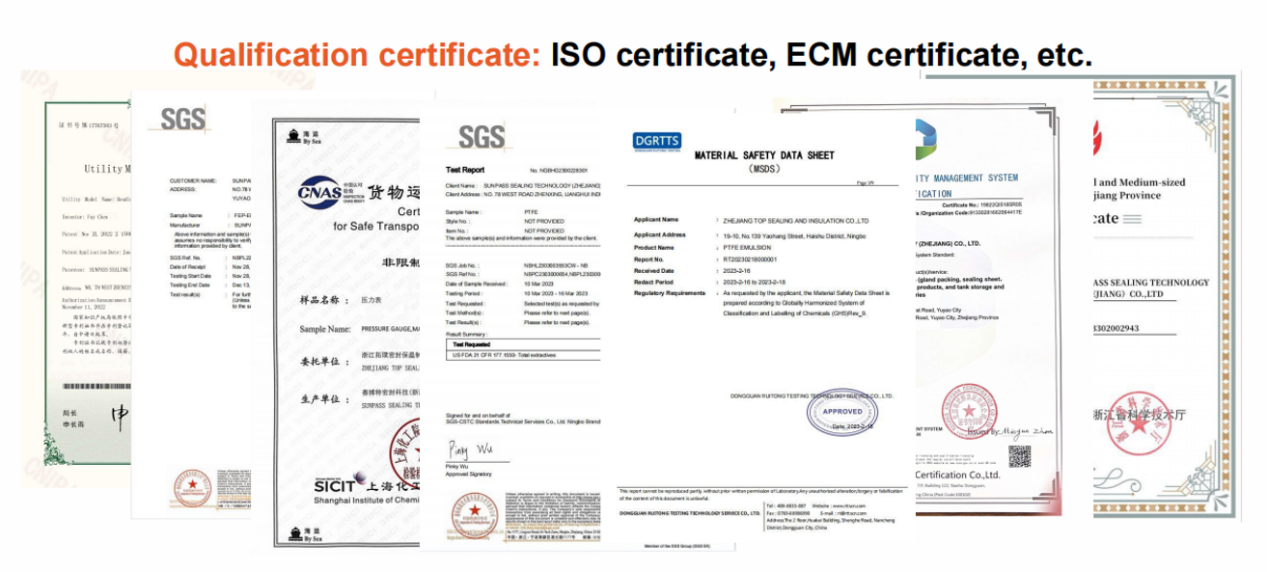
Technical Compliance & Quality Assurance: The products conform to global industrial sealing criteria and possess comprehensive compliance documentation, including SGS environmental reports, FDA food-contact certifications, and material composition certifications.
Static Applications: The optimized multi-layer cross-braided configurations achieve high-performance leakage suppression for static valve applications, minimizing fugitive emissions.
Dynamic Equipment: For rotating equipment, the micro-leakage lubrication rate is strictly regulated to ensure stable cooling and shaft protection during continuous operation.
Lifecycle Optimization: By implementing premium, wear-resistant raw materials with extended operational lifespans, our products effectively prolong the equipment Mean Time Between Failures (MTBF), reducing unscheduled downtime intervals and lowering the Total Cost of Ownership (TCO).
Operating Condition Adaptation Analysis: We provide optimized material pairing and braiding density solutions based on client-submitted parameters, including system pressure, temperature profiles, media range, and shaft linear velocity.
Complimentary Prototyping: Small-batch evaluation samples are provided for specific site trials, accompanied by complete material data sheets.
Vendor-Managed Inventory (VMI): We maintain strict safety stock levels for standardized specifications of graphite, aramid, and PTFE packings, enabling a rapid dispatch turnaround for routine maintenance, repair, and operations (MRO) orders.
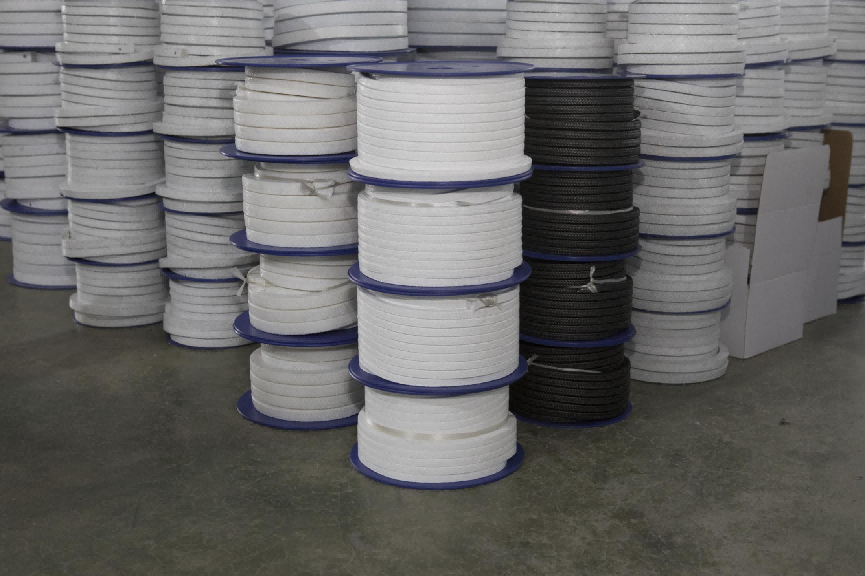
Expedited Production Lane: A dedicated "green channel" workflow is established for critical turnarounds, emergency plant shutdowns, or sudden stockouts, bypassing standard lead times to guarantee accelerated delivery.
Refrence
API Std 610-2021, "Centrifugal Pumps for Petroleum, Petrochemical and Natural Gas Industries," 12th Edition, American Petroleum Institute, Washington, DC, 2021.
API Std 682 R2022, "Pumps-Shaft Sealing Systems for Centrifugal and Rotary Pumps," 4th Edition, American Petroleum Institute, Washington, DC, 2022.
GB/T 13007, "Centrifugal Pumps - Test Methods," Standardization Administration of China, 2011.
JB/T 6612-2008, "Static Seal and Packing Seal - Vocabulary," Ministry of Industry and Information Technology of China, 2008.
Fluid Sealing Association, "FSA/ESA Pump and Valve Packing Installation Procedures," available at fluidsealing.com.
China Association of Petrochemical Equipment Management, "Pump Maintenance and Repair Procedures," CAPEPM, 2022.
Wang, X. and Wang, C., "Research on Fault Prediction and Intelligent Maintenance Strategy of Electromechanical Pump Units Based on Big Data," Ye Jin Zhi Bao, 2026.
Sunpass Sealing Technology (Zhejiang) Co. LTD
• Zhejiang Top Sealing and Insulation Co.,Ltd.
• Echo Industry Limited
• Tenglong Sealing and Thermal Insulation Manufactory
 Add: No. 78 West Road Zhenxing, Lianghui Industry Zone, Yuyao, Zhejiang, China
 Tel: +86 574 62837603
 E-mail: sales@sealings.cn