


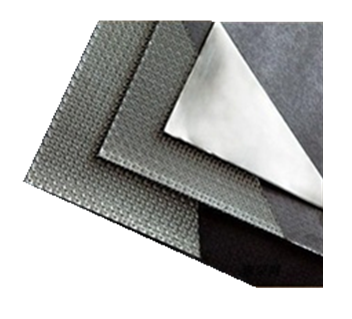
Flexible graphite sheets might look like simple black rolls sitting in a warehouse, but they pull heavy weight across modern process industries. Honestly, if you work in plantmaintenance or fluid sealing, you run into them every single day. They are not justrandom cutouts; they are engineered carbon matrices designed to handle aggressive fluids and brutal thermal shifts where conventional elastomers simply fail and blow out.
1. Core Material Composition
To understand why engineers rely on them, look at the core material composition. Standard industrial flexible graphite sheets usually maintain a carbon purity of 99.0% minimum (often reaching 99.5% for nuclear or high-purity grades), according to technical specifications outlined in the SGL Carbon Sigraflex Engineering Guide [1]. Because there are virtually no inorganic binders or impregnants to bake out, the material maintains its structural integrity under severe mechanical loads.
2. Industrial Sealing Applications
In terms of primary usage, industrial sealing takes the lion's share. Roughly 70% to 75% of all flexible graphite sheet production is converted into cut gaskets, Kammprofile facings, and spiral-wound gasket fillers used throughout the oil, gas, chemical processing, and power generation sectors. Plant engineers choose these sheets because they exhibit exceptional compressibility and recovery. For instance, a standard grade sheet with a density of 1.0 g/cm³ can achieve a compressibility greater than 40% under a load of 35 MPa [2], allowing it to flow smoothly into microscopic flange imperfections and prevent fugitive emissions.
"When you're dealing with hot hydrocarbon lines cycling between ambient and 400 degrees, standard rubber gaskets turn to toast in a month. We switched our entire high-pressure steam manifold to tang-reinforced graphite sheet cutouts, and our annual gasket failure rate dropped significantly." — Mark R., Senior Piping Reliability Engineer at a Gulf Coast Refinery
3. Thermal Management & Electrical Applications
Beyond static sealing, these sheets serve a massive role in thermal management and electrical applications. In-plane thermal conductivity can reach anywhere from 140 W/(m·K) up to 400 W/(m·K) depending on the density and rolling process, which makes high-purity graphite foils ideal as heat spreaders in electronics, fuel cell bipolar plate components, and thermal interface layers in industrial furnaces.
4. Chemical Corrosion Resistance
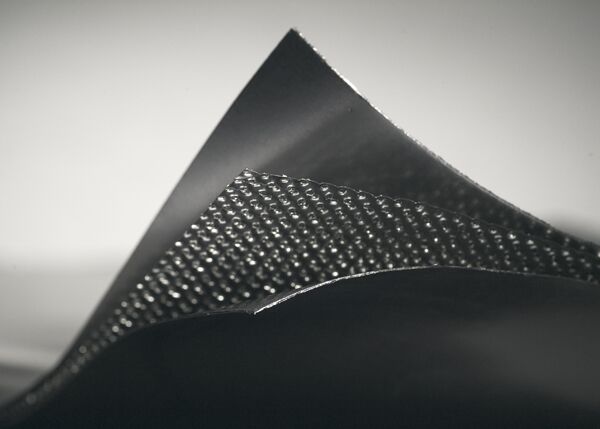
Furthermore, when dealing with corrosive chemical streams like concentrated sulfuric acid or saturated steam lines, graphite remains chemically inert. According to corrosion resistance data published in the Mersen Flexible Graphite Technical Manual [3] unreinforced flexible graphite shows a volumetric corrosion rate of less than 0.1 mm/year when exposed to most organic solvents, reducing unexpected flange blowouts across critical process units.
Key Technical Properties Summary
The table below summarizes core technical properties of standard flexible graphite sheets. All values are typical product specifications, not guaranteed minimums.
| Property | Standard Grade | Test Method / Source |
|---|---|---|
| Carbon Purity | > 99.0% (up to 99.5%) | SGL Carbon Sigraflex |
| Compressibility | > 40% @ 35 MPa | ASTM F36 |
| Thermal Conductivity (in‑plane) | 140 – 400 W/(m·K) | Manufacturer Spec |
| Corrosion Rate (organic solvents) | < 0.1 mm/year | Mersen Technical Manual |
| Density (standard grade) | 1.0 g/cm³ | ASTM F36 |
5. Why Choose SUNPASS
When sourcing flexible graphite sheets for critical sealing and thermal applications, material consistency and manufacturing quality directly impact service life and plant uptime. SUNPASS provides high-purity flexible graphite sheets and reinforced composite solutions engineered for reliable performance across the full spectrum of industrial applications.
① Premium-Grade Raw Materials
We source high-purity expanded crystalline graphite to deliver outstanding thermal stability, oxidation resistance and broad chemical compatibility across pH 0–14 media (except strong oxidizing acids). Multiple reinforcement options — tanged, flat and mesh cores in SS316L, SS304, carbon steel and Nickel 600 — extend mechanical robustness for high-pressure service conditions.
② Rigid In-House Production Control
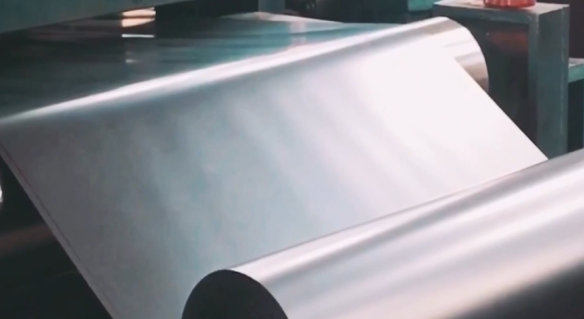
Every production phase, from graphite expansion to metal-graphite lamination, stays under tight internal control. Three core-bonding technologies are available to match different application priorities: mechanical-locked tanged core, thermal-bonded flat core, and blowout-resistant mesh core. Batch-to-batch inspections guarantee stable mechanical properties and uniform sealing performance.
③ Trustworthy Quality Assurance
SUNPASS maintains full batch traceability. Complete supporting documentation is provided upon request, including raw material certificates and standard test reports. Our high-purity graphite plus metal-core reinforcement mitigates oxidation-related performance degradation for extended service life in harsh operating environments.
④ End-to-End Technical & Supply Support
Our sealing engineers offer targeted material selection guidance based on your actual operating conditions: temperature, pressure, chemical media and flange class requirements. Standard sizes and thicknesses are kept in stock for fast lead-time. We also support OEM and custom solutions including special metal inserts and non-standard dimensions to fit your unique project needs.
Technical Sources & References
1. SGL Carbon, "Sigraflex Engineering Guide" — carbon purity 99.0–99.5%, thermal conductivity data. https://www.sglcarbon.com
2. ASTM F36, "Standard Test Method for Compressibility and Recovery of Gasket Materials" —40% compressibility @ 35 MPa. https://www.astm.org
3. Mersen, "Flexible Graphite Technical Manual" — volumetric corrosion rate < 0.1 mm/year.https://www.mersen.com
4. Industry estimate — 70–75% of flexible graphite sheet production used for cut gaskets and spiral-wound fillers in oil, gas, chemical, and power sectors.
Sunpass Sealing Technology (Zhejiang) Co. LTD
• Zhejiang Top Sealing and Insulation Co.,Ltd.
• Echo Industry Limited
• Tenglong Sealing and Thermal Insulation Manufactory
 Add: No. 78 West Road Zhenxing, Lianghui Industry Zone, Yuyao, Zhejiang, China
 Tel: +86 574 62837603
 E-mail: sales@sealings.cn