


The repair may be quick. The spare may not be. When your team plans tank maintenance, reserve shelf space where a failure, a sourcing delay or a fit error would hold up the job. Start with three records: the fault and location, the elapsed replenishment time, and the tank or assembly specification.
Let the maintenance event shape the parts list. A scheduled inspection may find a damaged manlid seal before work starts. Then construction and size come first. A bent clamp or missing lock pin affects closure hardware. An unreadable gauge or thermometer creates another problem. A relief valve is safety-related equipment; use the approved replacement and verification procedure for that tank.
Price is only one input. A cheap seal with an uncommon profile can stop a repair when no matching unit is on hand. A higher-cost component may be ordered for planned work if inspection gives enough notice. Write down the installed position, observed fault, delay consequence and next maintenance window. Rate different tank designs separately.
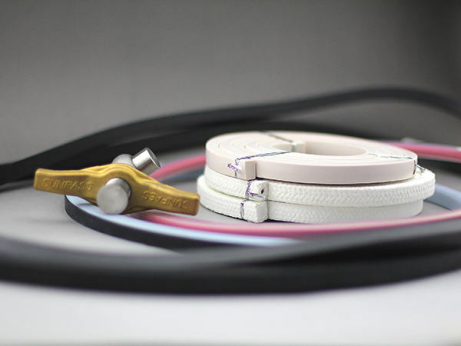
Use store issues and purchase receipts to set a starting minimum. Keep planned replacements apart from failures. A campaign that uses several seals at once is not ordinary recurring demand. Measure from order date to receipt date. Short history? Mark the minimum provisional, then revisit it after each issue.
For a regularly issued part, split expected use during replenishment from the buffer for uneven demand or delivery. If your issue records support an average daily-use figure, use this planning rule:
Reorder point = average daily use × replenishment lead time in days + safety stock
Keep the time basis consistent. A rarely issued part may show a near-zero daily average, yet one failure can delay a repair. For that part, set the minimum around the cost of waiting. Check lead time against order and receipt dates—not a catalogue estimate. Recalculate after a fleet, route or maintenance change.
| Stock class | Typical maintenance signal | Inventory response |
| Critical closure or safety part | Failure can delay return to service; fit must be confirmed | Reviewed minimum and named reorder owner |
| Planned replacement item | Inspection gives warning; use can be traced | Reserve for scheduled work and replenish from issues |
| Configuration-specific or low-use item | Sparse demand or fit varies by design | Stock only where delay exposure justifies it |
These are stock decisions. They are not product ratings. Buy a common seal for planned work. Keep a rare profile locally when sourcing it would interrupt a repair. Configuration changes the exposure.
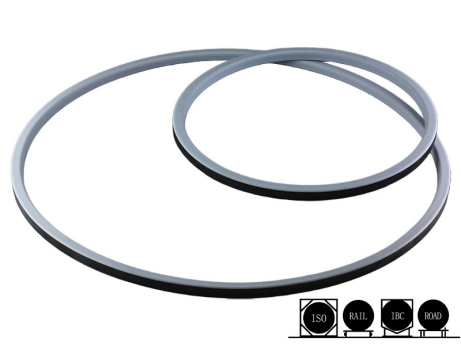
Start with the installed assembly. Your spare record should name the tank, position, drawing or OEM reference, dimensions, material, interface and revision approval. For a seal, record location and profile as well as material. Similar-looking manlid seals can use different constructions. For instruments, add range and mounting. For valves, add type, interface and approved specification.
Receiving is the last routine check before a delivered part becomes usable stock. Match it to the purchase specification and tank record. If there is doubt, quarantine it until maintenance or quality confirms the identity. Keep the supplier and lot reference with the receipt. A familiar number may hide an alias or revision. Use a photo to investigate; use the approved drawing or engineering decision to confirm fit.
The ISO tank container spare parts range covers manlid assemblies, seals, valve accessories, gauges, thermometers and other fittings. One source can simplify review. It cannot prove fit for your tank. SUNPASS lists different constructions, including the Super Tank Seal and PTFE braided manlid seal. Check the installed specification before approving either spare.
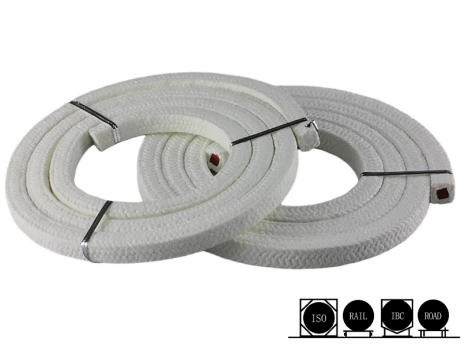
An unrecorded issue blinds the reorder rule. Reserve parts against planned work orders so the shelf balance shows free stock and committed stock separately. After an unplanned repair, enter the asset, fault and quantity used promptly. Then the storekeeper can see whether the balance has crossed its trigger before the next job.
Count high-impact parts first. Reconcile shelf quantity with the system. Check labels. Separate damaged or untraceable stock. If the same item triggers emergency orders, check its minimum, issue-entry timing and maintenance plan. Fix that cause before raising another quantity.
Keep only decision fields on the review sheet: usable stock, reservations, open orders, recent issues, observed lead time, reorder point and scheduled maintenance demand. Flag shortages, late deliveries and missing fit records. Give each item an owner. Name a backup for urgent purchases.
Set a minimum only when its reason is visible. The failure record shows the consequence of waiting. Receipt dates show replenishment time. The tank record identifies the required fit. Check those assumptions against later issues and inspections. If one record changes, update the affected quantity.
Start with parts that can prevent safe closure, inspection or return to service. Check that priority against your tank designs and maintenance procedures. Seals, closure hardware, instruments and safety-related valves may need review. There is no universal critical list.
For steady demand, multiply average daily use by replenishment lead time in days, then add selected safety stock. State the review period. Recheck the result when demand or lead time changes.
It depends on fleet size, seal replacement history, tank configurations, sourcing time and the impact of a delay. Confirm construction and dimensions in the part record first. Then set the minimum.
Record the tank or assembly reference, installed position, confirmed part number or drawing, dimensions, material and interface. Add range or mounting details for instruments and the approved specification for safety-related components.
Review stock after each issue and purchase receipt. Count high-priority parts on a schedule. Reassess the policy after a fleet, maintenance plan, service pattern or supplier lead-time change.
Sunpass Sealing Technology (Zhejiang) Co. LTD
• Zhejiang Top Sealing and Insulation Co.,Ltd.
• Echo Industry Limited
• Tenglong Sealing and Thermal Insulation Manufactory
 Add: No. 78 West Road Zhenxing, Lianghui Industry Zone, Yuyao, Zhejiang, China
 Tel: +86 574 62837603
 E-mail: sales@sealings.cn