


A request that says only “tank valve” leaves too many questions open. Which position? Which connection? Which cargo? The part can look correct and still fail at installation. The checklist here keeps the answer attached to the tank record from the first request through receiving.
Before anyone asks for a price, write down the tank identity, the drawing or fleet reference and the component location. Then add size, connection standard, material, quantity and needed date. A photo helps people orient themselves; measured dimensions and part markings decide the order.
Repeat orders are safer when the old part number stays visible. Note any change beside it—new cargo, a different wash chemical, a wider temperature range or a new inspection rule. Water service and solvent service are not interchangeable, even when the gasket looks the same.
The iso tank container spare parts page is a useful place to sort the component family. It does not replace the dimensions, markings and service data that belong on the purchase line.
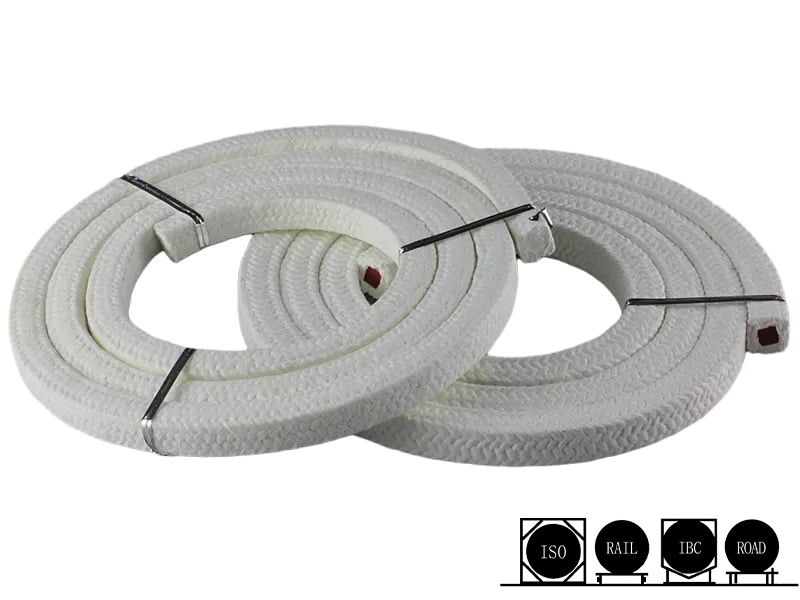
Treat the manlid as a system. The gasket, cover, clamp and sealing face share the job. Check the lid size, profile, material and manlid gasket dimensions, including the available compression space. Look at the metal before you approve the rubber or PTFE part: scratches, distortion, residue and a damaged clamp can all create an uneven seal.
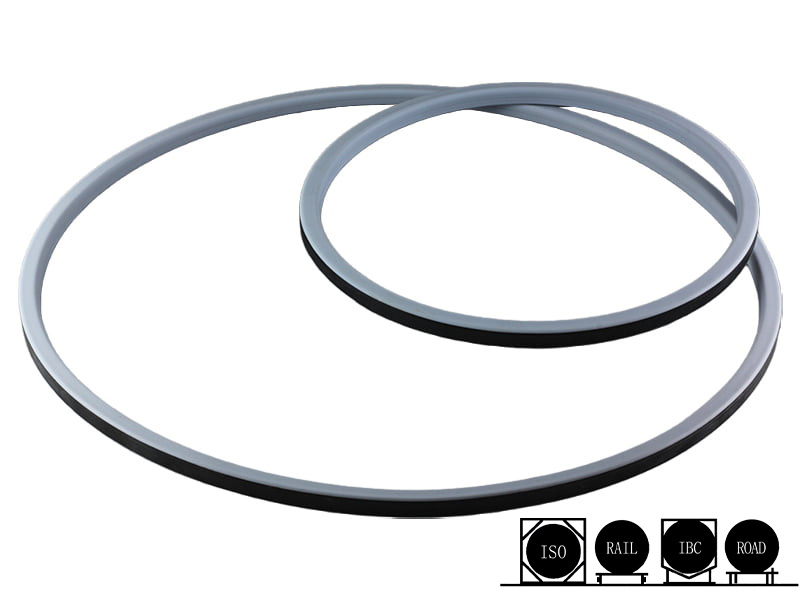
The cargo and the wash process decide more than many purchase requests admit. A PTFE-facing surface can help where absorption and cleanability matter. An elastomer core can help recovery after tightening. Still check temperature, pressure, groove dimensions and the cleaning agents themselves, and record storage and replacement interval for the next buyer.
Keep the approved sample or drawing with the order when the cover design is unusual. Two seals can share an outline and still behave differently under compression. That is why a super tank seal or a PTFE manlid seal with a PTFE-impregnated braided packing construction should be matched to its cover; the page also lists pure PTFE as a separate material option.
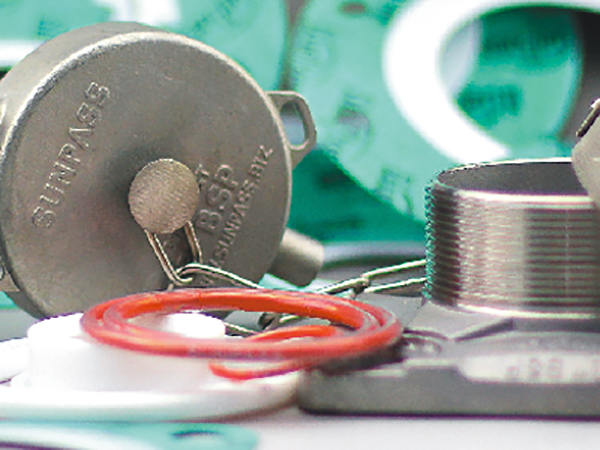
Write the valve line as if a new technician will receive it. Say “bottom discharge” or “air line,” rather than “tank valve.” Add DN, flange or thread, pressure class, body material and seal material. The position is part of the specification because one container can carry several different valve assemblies.
Put the medium and temperature next to the valve data. Solvents can swell a seal that is comfortable with a neutral liquid. Wet or saline service can demand more corrosion resistance than dry service. If the order is for a seal only, name the mating valve and its position.
List the associated hardware when it is part of the job: handle, spring, flange, dust cap or other accessory. This prevents a technically correct valve from arriving without the small part needed to return the tank to service. For repeat fleet orders, record the installed part number and the reason for replacement, such as leakage, corrosion, deformation or a failed inspection.
A gauge is useful only if it measures the condition the operator thinks it measures. Record range, connection, mounting position, display format and calibration requirement, and say whether the point is tank pressure or line pressure.
For a thermometer, include range, sensing length, insertion point and the capillary or connection arrangement. A stem that stops short may still show a convincing number, but from the wrong place. Add the impact protection and the post-installation verification method.
Small safety items disappear easily in a large purchase order. Relief devices, flame protection, locking pins, clamps, dust caps and security seals each have a job. Give that job a name, then add standard, material and quantity. “Miscellaneous accessories” is where missing items tend to hide.
For receiving, keep the checks practical. A manlid gasket needs a section measurement, surface inspection and a fit or compression check. A valve or valve seal needs its markings, mating faces and a safe operating check. For a pressure gauge, verify identity, zero reading and connection. For a thermometer, compare stem length, inspect protection and verify the indication. For a safety accessory, check markings, completeness and damage.
| Item | Data to Confirm | Receiving Check |
| Manlid gasket | Profile, section, material, cargo and cleaning chemistry | Measure the section, inspect the surface and check fit and compression |
| Valve or valve seal | Position, DN, connection, pressure, body and seal materials | Compare markings, inspect mating faces and operate only under a safe procedure |
| Pressure gauge | Range, connection, mounting position and calibration need | Check identity, zero reading and connection |
| Thermometer | Range, stem length, sensing position and connection | Compare length, inspect protection and verify indication |
| Safety accessory | Function, standard, material and quantity | Check markings, completeness and damage |
Substitution should be a visible engineering decision. If material, dimensions, connection or operating limits change, the supplier should flag it and provide technical data or a drawing. Approval can then be based on the tank record and cargo service, not on a visual match.
The history can stay simple: part number, supplier, installation date, service, inspection result and replacement reason. If the last part leaked, cracked, corroded, deformed or drifted, write that down before repeating the order.
Keep the record with the fleet history. It makes the next purchase faster, gives the storekeeper a reason to quarantine a damaged item and reduces the chance that a worn accessory is reused just because the replacement is late.
The useful unit is simple: one spare, one location, one service condition and one acceptance check. For a manlid seal, that means profile and squeeze. For a valve, it means position, connection and materials. For an instrument, it means range and mounting. For a safety accessory, it means a named protective job.
Profile, cross-section, material, lid geometry and cargo or cleaning conditions all matter. Nominal diameter by itself cannot identify the correct seal.
No. Bottom, top and air-line assemblies may use different dimensions, pressure conditions and materials.
No. Range, connection, mounting position and calibration requirements determine whether the reading can be trusted.
Compare the part number or drawing, dimensions, material marking and quantity. Then inspect for damage and verify fit or indication where it is safe to do so.
Only after the change in material, dimensions, connection and operating limits has been reviewed against the tank record and approved by the responsible technical person.
Sunpass Sealing Technology (Zhejiang) Co. LTD
• Zhejiang Top Sealing and Insulation Co.,Ltd.
• Echo Industry Limited
• Tenglong Sealing and Thermal Insulation Manufactory
 Add: No. 78 West Road Zhenxing, Lianghui Industry Zone, Yuyao, Zhejiang, China
 Tel: +86 574 62837603
 E-mail: sales@sealings.cn